
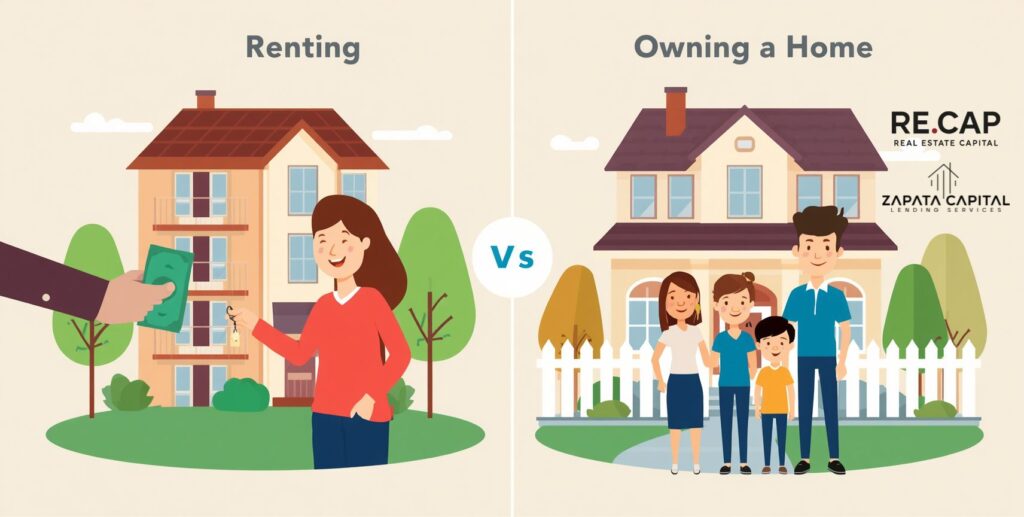
For many people in Houston and across Texas, deciding whether to continue renting or buy a home is one of the biggest financial decisions they will make. Rising rent prices, changing mortgage rates, and concerns about affordability have made this question even more important in 2026.
The truth is that there is no universal answer. The right decision depends on your finances, goals, lifestyle, and how long you plan to stay in one place. However, understanding how renting compares to building home equity can help you make a more informed choice.
What Does “Building Equity” Mean?
Home equity is the portion of your home that you truly own. It is calculated as:
Home Value – Remaining Mortgage Balance = Equity
For example:
- Home value: $350,000
- Mortgage balance: $300,000
- Equity: $50,000
As you make monthly mortgage payments and your property value increases, your equity can grow over time.
According to the Consumer Financial Protection Bureau (CFPB), equity can become a financial asset that homeowners may later use for refinancing, home improvements, or future wealth building.
Source:
The Advantages of Renting
Renting can make financial sense in certain situations, especially if flexibility is important.
-
Lower Upfront Costs
Renters usually pay:
- Security deposit
- First month’s rent
- Possible application fees
Buying a home often requires:
- Down payment
- Closing costs
- Inspections
- Appraisal fees
The National Association of Realtors (NAR) explains that upfront homebuying costs can be substantial, especially for first-time buyers.
Source:
-
More Flexibility
Renting may be better if:
- You may relocate soon
- Your income is changing
- You are unsure about long-term plans
- You prefer avoiding maintenance responsibilities
Selling a home can take time and may involve transaction costs.
-
Fewer Maintenance Expenses
Landlords are typically responsible for:
- Major repairs
- Roof replacement
- Plumbing issues
- HVAC maintenance
Homeowners must budget for these expenses themselves.
The U.S. Department of Housing and Urban Development (HUD) recommends homeowners prepare for ongoing maintenance costs.
Source:
The Advantages of Buying a Home
-
Building Equity Over Time
Unlike rent payments, mortgage payments can gradually increase ownership in an asset.
According to the Federal Reserve Survey of Consumer Finances, homeowners historically have significantly higher median net worth than renters.
Source:
- Federal Reserve — https://www.federalreserve.gov/econres/scfindex.htm
This does not mean homeownership guarantees wealth, but equity growth may contribute to long-term financial stability.
-
Predictable Housing Payments
With a fixed-rate mortgage, the principal and interest portion of your payment generally remains stable.
Rent prices, however, can increase when leases renew.
Freddie Mac explains that fixed-rate mortgages offer payment predictability over the loan term.
Source:
- Freddie Mac — https://myhome.freddiemac.com
-
Potential Property Appreciation
Home values may increase over time depending on:
- Local market conditions
- Neighborhood demand
- Economic growth
- Housing supply
The Federal Housing Finance Agency (FHFA) tracks U.S. home price trends through its House Price Index.
Source:
- FHFA — https://www.fhfa.gov
However, appreciation is never guaranteed, and home values can also decline.
When Renting May Be the Better Choice
Renting may make more sense if:
- You expect to move within a few years
- You do not yet have emergency savings
- Your debt-to-income ratio is high
- Your job or income is unstable
- You are still improving your credit
The CFPB advises prospective buyers to evaluate total housing costs and financial readiness before purchasing.
Source:
When Buying May Be the Better Choice
Buying may be worth considering if:
- You plan to stay in the home for several years
- You have stable income
- You have savings for emergencies and closing costs
- Your credit profile qualifies for financing
- You want long-term payment stability
For many families in Houston, homeownership can provide stability while gradually building equity over time.
Important Costs Buyers Should Not Ignore
Owning a home includes more than just the mortgage payment.
Potential costs include:
- Property taxes
- Homeowners insurance
- HOA fees
- Repairs and maintenance
- Utilities
- Closing costs
In Texas, property taxes can be higher than the national average because Texas does not collect a state income tax.
The Texas Comptroller provides official information regarding Texas property taxes.
Source:
- Texas Comptroller — https://comptroller.texas.gov/taxes/property-tax/
Renting vs Buying: A Simple Example
This example is simplified and does not guarantee future results.
Renting
- Monthly rent: $2,000
- Annual increases possible
- No equity accumulated
Buying
- Monthly mortgage payment: $2,300
- Part of payment reduces loan balance
- Potential equity growth over time
However, ownership also includes maintenance and transaction costs.
This example demonstrates why comparing only monthly payments may not provide the full financial picture.
Final Thoughts
Whether it is better to rent or buy depends on your financial readiness, lifestyle goals, and long-term plans.
Renting can provide flexibility and lower short-term responsibility. Buying may help build equity and create long-term housing stability.
The best approach is to evaluate:
- Your monthly budget
- Savings
- Credit profile
- Career stability
- Long-term goals
Speaking with a licensed mortgage professional or housing counselor can help you understand your options based on your personal situation.
Sources
- Consumer Financial Protection Bureau (CFPB)
https://www.consumerfinance.gov - National Association of Realtors (NAR)
https://www.nar.realtor - U.S. Department of Housing and Urban Development (HUD)
https://www.hud.gov - Federal Reserve Survey of Consumer Finances
https://www.federalreserve.gov/econres/scfindex.htm - Freddie Mac
https://myhome.freddiemac.com - Federal Housing Finance Agency (FHFA)
https://www.fhfa.gov - Texas Comptroller
https://comptroller.texas.gov/taxes/property-tax/