
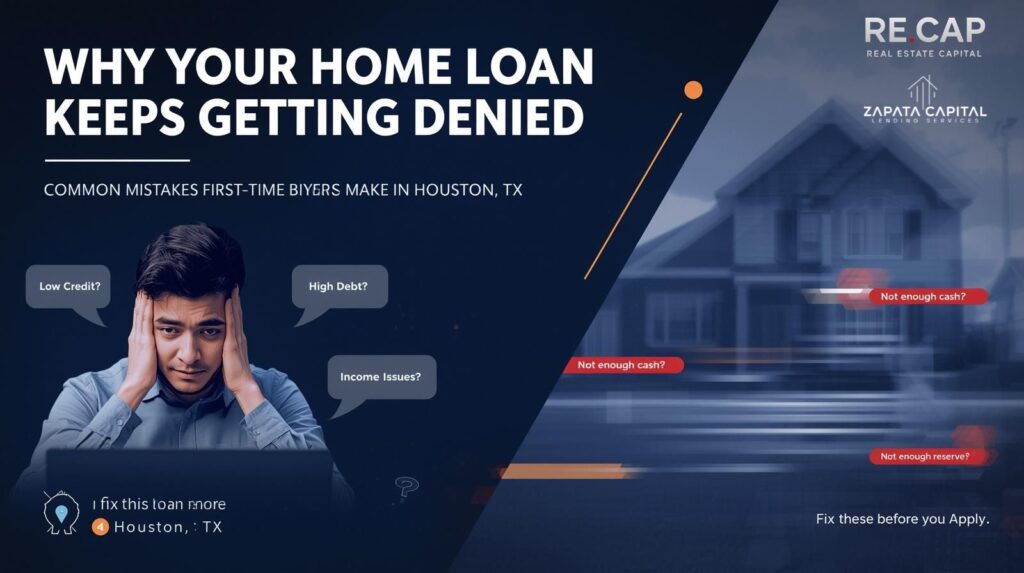
For many buyers, conventional financing is considered the “ideal” path to homeownership. Lower long-term costs, better rates, and flexible property options make it attractive on paper.
But if you’re a first-time buyer in Houston, the reality is a little different.
A large number of deals fall apart—not because buyers can’t afford the home—but because they run into unexpected roadblocks during the conventional loan process.
If you’re planning to buy in Houston or anywhere in Harris County, understanding these issues early can save you time, stress, and potentially thousands of dollars.
Why Conventional Loans Are Harder Than They Look
Conventional loans reward clean, predictable financial profiles.
That means:
- Stable W-2 income
- Strong credit history
- Low debt-to-income ratio
- Documented assets
The challenge? Many first-time buyers in Houston don’t fit perfectly into that box—especially in a city filled with entrepreneurs, side hustles, and variable income streams.
1. Debt-to-Income Ratio Becomes a Deal Breaker
One of the most common issues is the debt-to-income ratio (DTI).
Even if your income feels “high enough,” lenders look at how much of that income is already committed to debt—credit cards, car loans, student loans.
In Houston, where the cost of living is relatively manageable but lifestyle debt is common, many buyers hit this ceiling quickly.
What Happens
- You get pre-approved… then denied during underwriting
- Your loan amount gets reduced
- You’re forced to look at lower-priced homes
Reality
Conventional loans typically prefer DTIs around 43% or lower. Anything higher starts to create friction.
2. Credit Score Is Just Not Strong Enough
A lot of first-time buyers assume a 620 credit score is enough.
Technically, yes—you can qualify. But in Houston’s competitive housing market, “qualify” and “compete” are two different things.
What Low Credit Really Does
- Higher interest rates
- Higher monthly payments
- Stricter underwriting
- Increased scrutiny on your file
Buyers with scores in the 680–740+ range tend to get significantly better terms.
3. Not Enough for Down Payment + Closing Costs
One of the biggest surprises for Houston buyers is that the down payment isn’t the only cash required.
Even with a 3–5% down conventional loan, you also need:
- Closing costs
- Prepaid taxes and insurance
- Reserves (in some cases)
What This Means
Buyers often underestimate how much cash they actually need to close—and deals stall when funds come up short.
In Houston, depending on the price point, total upfront costs can easily exceed expectations.
4. Income Documentation Problems (Especially for Self-Employed Buyers)
Houston has a large number of:
- Self-employed professionals
- Contractors and freelancers
- Small business owners
And this is where conventional loans get tricky.
The Issue
Lenders don’t look at what you earn—they look at what you report on your tax returns.
If you write off a lot of expenses (which is smart for taxes), your qualifying income may look much lower on paper.
Result
- Lower loan approval amount
- Denial despite strong actual cash flow
- Delays due to additional documentation requests
5. Employment History Requirements
Conventional loans typically require a 2-year consistent work history.
This becomes a problem for:
- Buyers who recently changed jobs
- Those who switched industries
- Newly self-employed individuals
In a growing city like Houston, job mobility is common—but lenders don’t always view that as stable.
6. Appraisal Issues in Competitive Houston Markets
Houston’s market can move fast, especially in desirable neighborhoods.
Sometimes, buyers agree to a purchase price—but the appraisal comes in lower.
When This Happens
- The lender won’t finance the full amount
- You have to cover the difference in cash
- Or renegotiate with the seller
For first-time buyers with limited savings, this can completely derail a deal.
7. Property Condition Requirements
Conventional loans are less strict than FHA—but they still have standards.
Issues like:
- Roof damage
- Foundation concerns
- Safety hazards
can raise red flags during appraisal.
In older Houston neighborhoods, this comes up more often than buyers expect.
8. Competing Against Stronger Buyers
In Houston, you’re not just competing against other first-time buyers.
You’re up against:
- Investors
- Cash buyers
- Buyers with larger down payments
Even if you qualify for a conventional loan, sellers may favor offers with:
- Higher down payments
- Stronger financial profiles
How to Overcome These Conventional Loan Challenges
Here’s what experienced buyers do differently:
1. Get Fully Underwritten (Not Just Pre-Approved)
A basic pre-approval isn’t enough in Houston’s market. A fully underwritten file gives you stronger buying power.
2. Improve Your Credit Before Applying
Even a 20–40 point increase can significantly lower your rate and improve approval odds.
3. Reduce Debt Strategically
Paying down credit cards can improve your DTI quickly.
4. Be Honest About Your Income Type
If you’re self-employed, forcing a conventional loan may not be the best move.
5. Have a Backup Loan Option
Many buyers pivot to:
- FHA loans for flexibility
- Non-QM loans for income qualification
This flexibility is often what keeps deals alive.
Final Thoughts
Conventional loans are still one of the best financing options available—but they’re not always the easiest to secure, especially for first-time buyers in Houston.
The biggest mistake you can make is assuming approval will be straightforward.
The smarter approach is to understand the common issues early, prepare for them, and have a strategy in place before you start shopping.
Because in Houston’s fast-moving market, the buyers who win aren’t just qualified—they’re prepared.